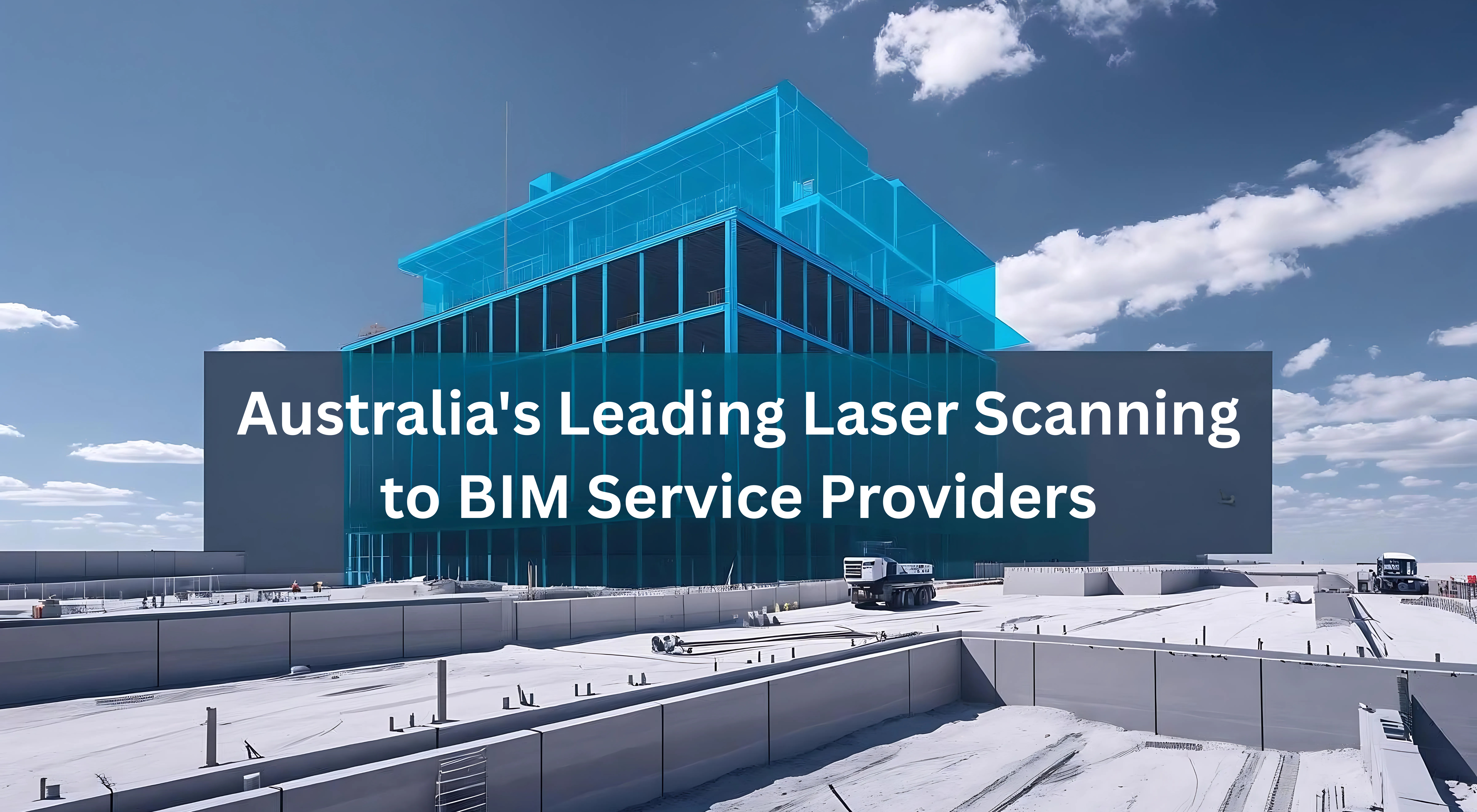
If you’ve heard people in Australia’s construction, engineering, or architectural fields talk about “laser scanning to BIM,” you might wonder what makes this technology so transformative and why it’s gaining ground so quickly. In simple terms, laser scanning for BIM (Building Information Modeling) is revolutionizing the way new and existing buildings, infrastructure, and heritage sites are designed, managed, and maintained across the country.
Whether it’s a complex bridge upgrade in Sydney, the refurbishment of a historic Melbourne library, or the creation of a smart urban district in Brisbane, laser scanning to BIM brings precision and digital intelligence to every stage of a project. At the forefront of this shift are Australia’s leading service providers: WSP, Tesla Outsourcing Services, HDR Inc., AECOM, and Jacobs. Each of these Scan to BIM experts brings unique strengths to the table, making them preferred partners for both public and private organizations looking for efficient, data-driven project delivery.
This article will help you understand how laser scanning and BIM work together, highlight the qualities of top service providers, introduce Australia’s leaders in the field, and offer practical tips for choosing the right Scan to BIM partner for your project.
Laser scanning for BIM harnesses advanced technology to create digital, 3D models of physical structures. Here’s how it works: teams use laser scanners (stationary, mobile, or handheld) to capture detailed spatial data inside and around a building or site. These millions of data points, known as a “point cloud,” are then fed into BIM software to create an intelligent, highly accurate 3D model.
In the Australian context, this method has quickly become essential for:
Laser scanning to BIM makes project delivery faster, safer, and more collaborative. Because everyone from the architect to the construction manager works from the same reliable data set, clashes and surprises are minimized.
Actionable Tip:
The most value comes at key stages such as:
Top service providers stand out because they combine technical know-how, project management expertise, and a deep understanding of Australia’s unique construction landscape. Here’s what to look for:
WSP is a global powerhouse with a strong Australian presence, known for forward-thinking solutions across engineering and project delivery. Their team leverages advanced laser scanning and BIM tools for infrastructure and building projects, helping clients manage risk and deliver high-quality outcomes every time.
WSP’s approach centers around cost-effective, accurate data capture and 3D model generation. They’ve played vital roles in the documentation of transport interchanges, airport upgrades, and major urban developments. By providing detailed BIM models early in the project, WSP helps reduce downstream errors and streamlines construction coordination.
Tesla Outsourcing Services has carved out a niche in the Australian market by offering high-accuracy laser scanning, as-built documentation, and comprehensive Scan to BIM services for everything from residential towers to utilities and industrial complexes. What sets Tesla Outsourcing Services apart is their ability to support both local and remote clients, often working closely with Australian project teams to clarify requirements and ensure BIM deliverables are precisely tailored for each project.
Tip: When collaborating with a remote BIM service provider like Tesla Outsourcing Services, clear project briefing documents and agreed-upon data standards (for file exchange, modeling level of detail, etc.) can make a world of difference.
HDRinc blends global BIM expertise with strong local knowledge of Australia’s engineering and building sectors. Their Australian division regularly integrates laser scanning into major infrastructure projects, such as bridges, highways, and large institutional campuses. By rigorously checking for design clashes in BIM before construction starts, HDRinc helps clients prevent costly on-site mistakes and ensures better future facility management.
HDRinc’s unique value comes from its integration of BIM data into long-term asset management solutions, making ongoing maintenance and upgrades more streamlined and data-driven.
AECOM’s Scan to BIM services blend reality capture (laser scanning, photogrammetry, and LiDAR) with innovative digital modeling for infrastructure and large-scale construction. Their reputation for delivering on high-stakes Australian projects like urban railway redevelopments or specialized health facilities stems from their ability to produce detailed digital twins that facilitate both construction and long-term asset performance.
When managing complex, multi-stage projects, AECOM’s experts work closely with clients to connect BIM deliverables directly to facilities management systems, enabling smarter, more sustainable buildings in the long run.
Jacobs is world-renowned for their work in digital engineering, applying this expertise in Australia through the use of technologies like NavVis mobile scanning and robust BIM workflows. Jacobs supports major infrastructure, industrial upgrades, and emerging smart city initiatives across the country. They’re particularly known for blending sustainable design with digital innovation, incorporating renewable energy analysis, climate resilience strategies, and IoT into BIM models for future-ready outcomes.
With a firm commitment to collaboration and transparency, Jacobs ensures that even large, multi-stakeholder projects benefit from clear, accurate, and easy-to-use 3D models.
Choosing the right Scan to BIM service provider involves more than picking a name from a list. Here’s what to consider:
Actionable Tip: For heritage refurbishments, ask prospective providers about their experience with complex, delicate environments, and request references from previous similar projects.
As technology advances, several trends are shaping the future of laser scanning and BIM across Australia:
These trends all point to Scan to BIM becoming even more crucial in delivering smart, efficient, and future-proof infrastructure for Australia.
Australia’s adoption of laser scanning for BIM is driving improvements in accuracy, efficiency, and sustainability for all types of infrastructure projects. Service providers like WSP, Tesla Outsourcing Services, HDR Inc., AECOM, and Jacobs bring state-of-the-art technology and real-world experience to this evolving field, empowering construction and engineering teams to deliver better results.
When choosing a laser scanning to BIM partner, remember to focus on their technical capabilities, experience with local projects, collaborative approach, and a strong track record in delivering clear, useful BIM models. By adopting these advanced practices now, project teams lay the groundwork for smarter, safer, and more cost-effective infrastructure across Australia.
So, whether you’re looking to upgrade a heritage building, modernize a hospital, or develop the next smart urban district, investing in a skilled Scan to BIM service provider is a forward-thinking move with benefits that will last for decades.